Many people delay getting hearing aids because they don’t think they’ll like how they look or feel. And that’s completely understandable! For years, hearing aids were large, noticeable, and often negatively associated with getting old. In some cases, people even worried that they might be left out of conversation altogether by others who assumed they wouldn’t be able to hear or comprehend.
For many people, this image has stuck, making them hesitant to take the next step. But the reality is that today’s modern hearing aids look and feel very different from what you might expect. Advances in design and technology have made them smaller, more comfortable, and far more discreet.
If you’ve been putting off treatment because of how hearing aids used to look, it might be time to take a fresh look at what’s available today!
The Hearing Aid You’re Picturing Doesn’t Really Exist Anymore
If you close your eyes and picture a hearing aid, you might imagine something large, hooked over the ear, and visible from across the room. If that’s the case, you’re thinking about hearing aids circa the 1980s and ’90s.
Since then, the entire category has evolved. Advances in miniaturization, design, and digital technology have completely reshaped what hearing aids look like today. They’re smaller, sleeker, and designed to blend in (or disappear entirely).
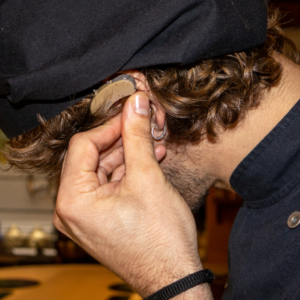
Many of today’s devices sit fully inside the ear canal, making them virtually invisible during everyday conversation. Others rest behind the ear but are so compact and lightweight that they’re easy to overlook, especially when matched to your hair or skin tone.
Primary Hearing Aid Styles, From Invisible to Barely There
If you’re wondering what your main options in hearing aids actually look like, here’s a simple breakdown:
Invisible-in-canal (IIC)
These are as discreet as it gets. IIC devices sit completely inside the ear canal and are custom-made to fit your ear. From a normal conversational distance, they’re essentially invisible. They’re a popular choice for people with mild to moderate hearing loss who prioritize subtlety.
Receiver-in-canal (RIC) / Receiver-in-the-ear (RITE)
This is the most common style today. A tiny component sits behind the ear, connected by a nearly invisible wire to a small speaker in the ear canal. At a glance, they often resemble wireless earbuds. Most people won’t notice them unless they’re looking.
Behind-the-ear (BTE)
These sit fully behind the ear and are slightly larger, but they’re still far more streamlined than older versions. They’re often recommended for more significant hearing loss and offer excellent performance without the bulky appearance people expect.
The key takeaway: Today’s discreet hearing aids are designed to fit your life, not announce themselves.
Modern Hearing Aids: Looking Better and Doing a Lot More
The changes in modern hearing aids aren’t just cosmetic. Today, they function more like smart devices than traditional medical equipment. Many connect directly to your phone via Bluetooth, letting you stream calls, music, or even TV audio straight to your ears with no headphones needed.
Most come with smartphone apps, so you can adjust volume or switch settings without ever touching the device. Say you’re walking into a noisy restaurant: You can fine-tune your hearing to match the environment in seconds. Rechargeable batteries have also replaced the tiny ones people used to struggle with. Just place them on a charger overnight, like your phone.
Getting Over the Fear and Stigma of Hearing Devices
Even knowing all of this, it’s easy to hesitate. Exploring hearing aid options can be challenging on a mental and emotional level because it’s an admission that our hearing isn’t what it used to be. This can make us feel helpless and like we aren’t fully in control of what’s happening to our bodies.
But here’s a different way to look at it: Hearing aids aren’t a sign that something has gone wrong. They’re simply a sign of change, which happens to us all. They’re proof that you’re taking action to support and equip your body in essential ways.
Imagine wearing a discreet, barely (if at all) visible device and finally being able to follow along in conversation, hear better in crowds, and focus on the things that really interest you. Talk about empowering!
See For Yourself What Today’s Hearing Aids Look Like
The easiest way to let go of that outdated mental image is to check out for yourself what’s available. We invite you to come in, ask questions, and explore your options with no pressure and no commitment necessary. Consider it a chance to see and feel how different modern hearing aids really are.
Most people leave surprised by how small, comfortable, and natural modern hearing aids have become! Call our office to schedule your visit online today.