
It is a well-documented biological fact that dogs with long, floppy ears do not capture directional sound waves as efficiently as pointed-ear breeds. It’s probably not surprising to learn that cats, dogs, and hamsters have the ability to adjust the direction of their ears to enhance their ability to pick up sounds from the front, sides, or rear.
It is crucial to realize that non-human mammals are not alone when it comes to outer structures actively filtering auditory inputs. The human ear has similar features, and it can vary from person to person.
In this guide, we will analyze exactly how outer ear morphology alters your daily perception and examine how these breakthroughs will revolutionize hearing loss protocols over the coming decade.
The Physics and Anatomy of Outer Ear Morphology
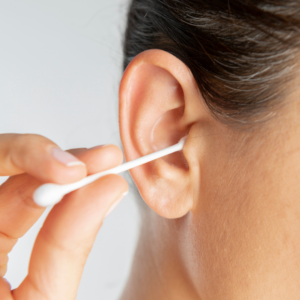
The primary architecture of the outer ear consists of the external, visible tissue frame that we colloquially call the ear. Otolaryngologists classify this specific external cartilage formation as the “auricle” or the “pinna.” Additionally, this outer framework includes the specialized ear canal pathway that funnels sound vibrations inward to the middle ear chamber.
Ever since early science lessons, we have understood that the intricate inner ear is the true powerhouse where hearing happens. Consequently, your auricle could sustain severe traumatic damage in an accident, yet as long as the auditory canal remains uncompromised and the middle and inner ear networks function normally, your baseline hearing would survive.
Because of this belief, thousands of patients choose to have a cosmetic operation to pull back or minimize their ear prominence. Common knowledge was that this didn’t change hearing in the least.
Does this mean the auricle is essentially a useless appendage on the side of the human head? Is its mechanical responsibility limited to catching passing sounds and routing them down the ear canal? Or could its unique asymmetry serve an incredibly important, hidden purpose that directly alters how your brain processes sound?
Eventually, advanced hearing researchers became incredibly curious about outer ear variables. They started asking questions. In science, this is when discoveries take place. This is precisely what transpired when investigators isolated the auricle component of your outer ear anatomy.
The Core Findings: Uncovering the Auricle’s True Function
Modern science has thoroughly documented that our brains determine horizontal sound direction by tracking which ear the physical sound wave strikes first. Consequently, any individual possessing two healthy, symmetrical ear pathways can instantly discern whether an acoustic event originated from their left or right flank. But what physiological purpose is served by the highly complex, asymmetrical topography of your unique auricle?
To discover the mechanism, neuroscientists designed a study that temporarily deformed the outer ear shape of their participants. To modify the anatomy, they nested a flexible silicone filler into the structural grooves of the auricle, leaving the ear canal completely open. Clogging the deep canal would have been incredibly dangerous to the patient’s tympanic membrane.
When the tests initiated, they discovered that though the subjects still recognized left-from-right sounds, they could no longer detect if a sound wave traveled from above their heads or deep under the furniture.
They had just lost a previously unknown piece of the human ear’s geolocation system.
The Experimental Framework: fMRI Brain Mapping and the Auricle
The experimental protocol relied on fMRI scanners to track localized neural firings and measure brain activity. Subjects were asked to track a battery of spatial sounds before their ear shape was altered, providing a clear blueprint of how their brains reacted as they located the sound.
The investigators documented that localized acoustic neurons fired at an accelerated rate when a tone was generated below the subject, and shifted to a delayed, slower rhythm when the noise came from above.
Once the subjects were equipped with the custom ear alterations, they were challenged to map out the direction of the sounds again. Overwhelmingly, the participants could no longer say. They completely inverted the vertical axis, assuming sounds from the ceiling were located down on the floor, and vice versa. The underlying brain cells were discharging in highly chaotic, unpredictable sequences—registering a state of complete sensory confusion.
To study neural plasticity, researchers instructed the subjects to wear the silicone ear molds continuously for seven days before returning to the lab for a secondary round of testing. To the surprise of the researchers, their neural geolocation system had completely adapted to the altered shape, allowing them to accurately track sound origins once again. This data established that minor changes to your outer ear geometry can completely rewrite your physical ability to hear and map your environment.
Once the researchers safely removed the silicone inserts, their neuro-auditory tracking centers immediately returned to normal operating parameters.
This study clearly demonstrates that the process of human hearing is much more sophisticated than sound vibrations simply traveling through a tube to bounce off your eardrum on their way to the cochlea. The unique physical reflection of sound against the outer ear folds empowers the central nervous system to harvest more spatial data about the noise than we had previously understood.
How This Outer Ear Discovery Is Redefining Audiological Medicine
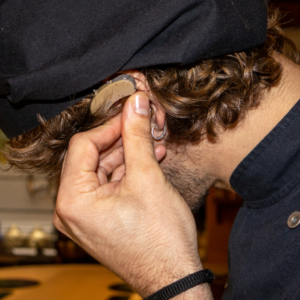
Hearing and balance rely on the inner ear. However, this specific research provides a much deeper explanation of how the peripheral and central parts of our ears collaborate to interpret what we’re hearing. By studying these micro-refractions, hearing scientists are on the path to developing new and improved frameworks to treat hearing loss. Hearing aid technology has advanced significantly over just the past 10-20 years.
As we continue to decode these advanced anatomical interactions, we will possess the tools to make each patient’s custom hearing aid experience even better.