For mothers and fathers of newborns, getting a diagnosis of early auditory impairment brings considerable anxiety and dread. The reassuring truth is that by applying prompt testing and therapeutic help, young children with hearing deficits are able to excel. Remarkably, such young children can gain language proficiency, interpersonal traits, and lasting relationships in their community, attaining a truly rich existence!
Utilizing wearable hearing aids and state-of-the-art cochlear implants supplies two proven clinical methods for backing babies with hearing impairment. Below, we take a look at how these technologies function and how to decide which option is right for your child.
Grasping the Basics of Pediatric Hearing Loss
Auditory loss across infants can be caused by various potential factors, including:
- Hereditary genetic markers (even completely lacking any prior parental history)
- Early prenatal viral exposures including cytomegalovirus (CMV) or rubella pathogens
- Labor complications, featuring perinatal hypoxia or preterm birth
- Specific clinical medications given during neonatal intensive care
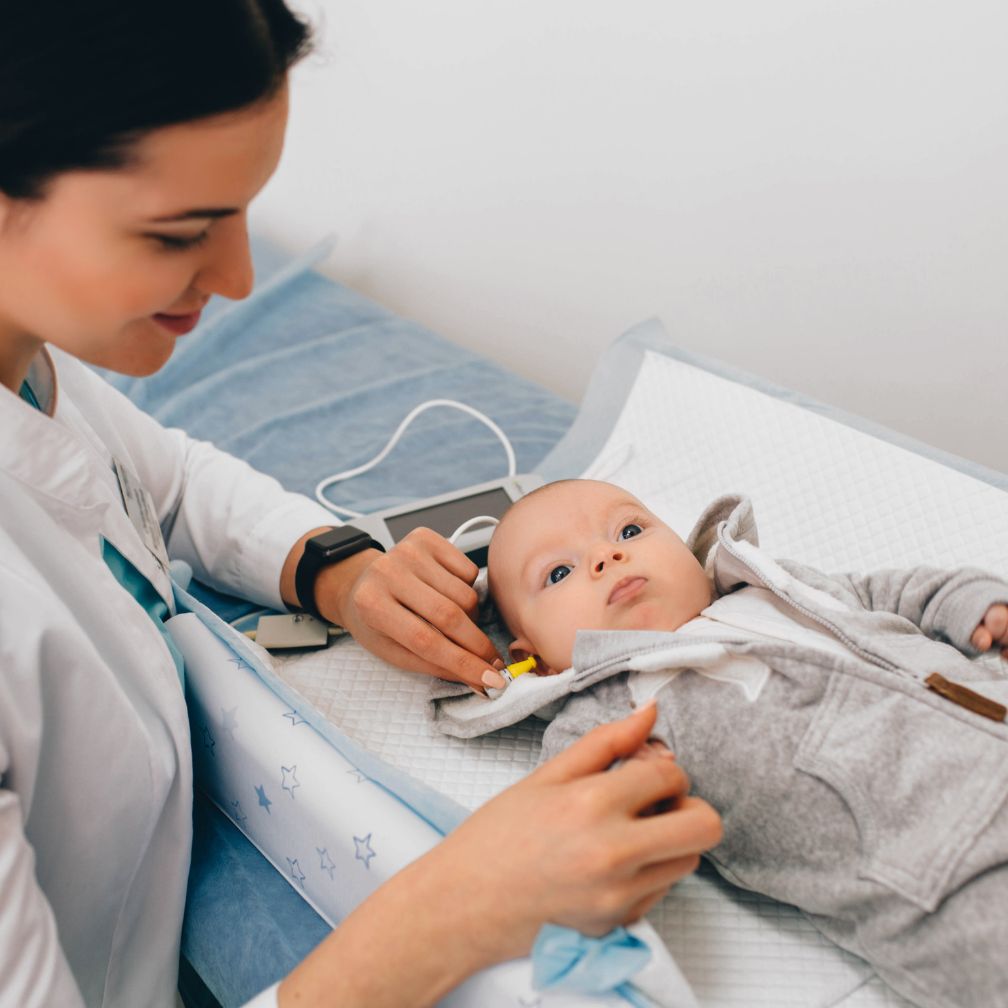
The most important step? Early diagnosis. Because of these standards, babies delivered in United States hospitals complete hearing screens prior to heading home. Trained pediatric hearing clinicians consistently enforce the established “1-3-6” intervention timeline:
- Initial hearing check performed within 30 days of birth
- Confirmed hearing diagnosis finalized within 90 days of life
- Intervention (with hearing devices or therapy) commenced by 6 months
Achieving these diagnostic benchmarks offers babies an ideal foundation for strong speech, linguistic, and brain development. If you need guidance concerning these newborn checks, your family pediatrician will gladly offer support!
Pediatric Hearing Aids for Young Babies
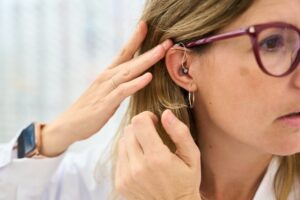
For babies with mild to severe hearing loss, custom hearing aids typically represent the first line of treatment. These miniature, body-worn units enhance environmental audio, allowing infants to hear human speech and background noise much more clearly.
Advanced pediatric hearing aids operate as:
- Clinical grade safe for deployment on babies merely weeks old
- Crafted featuring soft, comfortable ear molds that adapt as the baby matures
- Equipped with tamper-proof battery doors and specialized pediatric safety components
- Individually calibrated by a specialized pediatric audiologist to align with your baby’s unique hearing profile
During physical development, these hearing instruments require routine adjustments to ensure snug placement and precise amplification.
Understanding Cochlear Implantation for Babies
In cases where a baby suffers from severe to profound sensorineural impairment that shows insufficient improvement with standard hearing aids, specialists routinely suggest a cochlear implant. In direct contrast to external acoustic hearing aids, modern cochlear implants:
- Require surgical implantation within the auditory bone structure performed under controlled clinical conditions
- Safely bypass damaged structures inside the cochlear pathway
- Translate ambient audio into precise electrical impulses that stimulate the acoustic nerve directly
Standard cochlear implants remain:
- Fully FDA-approved for pediatric candidates aged 9 to 12 months
- Uniquely successful when combined with early intervention and active family involvement
- Advised strictly following complete multi-disciplinary testing by a certified audiologist and otolaryngologist
That multi-step journey involves imaging, objective hearing assessments, and detailed consultations regarding anticipated long-term progress.
Contrasting Hearing Aids with Cochlear Implants
- Mild to severe auditory decline uses Hearing Aids; Severe to profound hearing loss: Cochlear Implants
- Non-Invasive acoustic positioning: Hearing Aids; Invasive (Surgical): Cochlear Implants
- Traditional acoustic amplification: Hearing Aids; Direct electrical signal generation: Cochlear Implants
- Starts at Infancy: Hearing Aids; Starts at 9-12 Months: Cochlear Implants
Final Takeaways: Navigating Infant Hearing Solutions
In the event your infant receives a hearing loss diagnosis, you possess multiple viable options alongside extensive professional backing. By partnering with skilled pediatric auditory specialists, countless infants successfully cultivate communication skills that mirror those of their age group.
Irrespective of whether your child receives fitting for hearing aids or surgery for cochlear devices, prompt intervention delivers permanent lifelong benefits.
Have questions about your baby’s hearing health? Reach out to our specialists today to obtain an exhaustive evaluation and custom-designed care plan.