What causes that peculiar, unprompted sound that feels like ambient static or trapped air whispering in your ears? What explains the fact that you are the sole individual capable of detecting this frequency? This localized head noise is a genuine physiological event, not a trick of the mind.
Happily, you are likely not suffering from “phantom ring syndrome,” a modern behavioral manifestation where excessive cellular device users falsely perceive incoming calls, vibrations, or alerts.
But it could be tinnitus. Make no mistake, this perceived internal audio is a legitimate medical symptom, and certain lifestyle habits can rapidly worsen its intensity.
While this background static is present, you can generally still decode the words of those around you. Rather, it simply feels as though an unwanted layer of acoustic static has been artificially superimposed over your entire auditory field.
Let’s look at where this white noise comes from, what it is, and what you may be able to do to reduce or get rid of it.
The Root of Tinnitus: Why Your Brain Tracks This Persistent Hum
From an audiological standpoint, tinnitus is almost always a direct proxy for localized hearing loss. The condition presents as a continuous or episodic phantom frequency that overlays all external environmental sound. Depending on the type of tinnitus you have, it may be unnoticeable most of the time. Or you may be saying, this white noise in my head feels deafening, threatening to take my sanity.
Chances are, you have struggled to communicate the reality of your symptoms to loved ones, as this invisible impairment is nearly impossible to comprehend without personal experience.
Many patients struggle to accept that a roaring sound inside their ears cannot be recorded or validated by outside observers. This paradox leads many to worry if they are suffering from a central mental delusion or cognitive misfire. How can an invisible sound wave cause such a profound barrier when you are trying to comprehend spoken language from family members? Or utterly destroy your capacity to find peace, unwind, and sleep soundly through the night?
The Quiet Room Trap: How Inactivity Highlights Internal Buzzing
It is a well-documented clinical fact that a lack of environmental audio causes your internal ear noises to feel significantly worse. This structural shift happens because the internal hum doesn’t have to fight against real-world sound waves—as seen when people lock down their bedrooms for total quiet at night. They operate without a television background feed, avoid running any radio streams, and eliminate all ambient audio. When you couple that absolute stillness with the reality that you are isolated with your own thoughts, your conscious attention locks directly onto the internal buzzing, creating a fixation cycle that makes the symptoms feel vastly more intense. No matter if you battle soft whistling or intense buzzing across variable frequencies, a hushed bedroom at night establishes the exact scenario required for tinnitus to become unbearable.
When Tinnitus Mimics Wind, Static, and Alternative Acoustic Textures
Not only does the disorder defy easy explanation to outsiders, but sharing notes with another patient can frequently muddy the waters. Because their internal audio profile may feature entirely unique pitches or patterns compared to your own, you might mistakenly assume your specific condition has a different medical diagnosis.
In reality, the overwhelming clinical likelihood is that you are dealing with standard tinnitus variations. That’s because tinnitus takes many forms and sounds different to different people. Common clinical presentations involve consistently tracking frequencies that mimic:
- The fuzzy roar of unchanneled television feedback
- A resonant, steady internal humming tone
- Buzzing
- The classic, crystalline ringing tone deep within the ears
- A blunt, repetitive thumping sequence inside the canal
- A steady, monotonous frequency resembling an active dial tone
In almost all instances, you are completely isolated in your perception of the tinnitus-induced white noise. So if you ask a primary physician to confirm your symptoms, they probably can’t. Out of medical necessity, your healthcare provider must rely entirely on your subjective self-reporting to establish the history.
Unfortunately, this clinical gap frequently leaves patients feeling misunderstood or dismissed by general practitioners who lack dedicated training in audiological medicine.
Consider the case of Thomas, a veteran steelworker, who recounted: ‘When the constant buzzing first developed, I brought it up during a checkup with my regular doctor. While the physician did agree that it matched the description of tinnitus, he completely underestimated how exhausting the background noise was to my mental health. He spoke about it like it wasn’t really there. He mistakenly believed I could simply choose to ignore the frequency and completely failed to provide any therapeutic pathways or solutions.”
Speaking with a specialist can help solve this problem and can help identify solutions. Sometimes the sound itself can offer clues as to how to treat it.
Investigating Vascular Variations: Rushing and Whooshing Frequencies
The diagnostic tracking process is made difficult by the reality that your internal head noises can take on completely unexpected mechanical characteristics. To specify, if you track a distinct whooshing, rushing, or heavy thumping rhythm that locks perfectly in sync with your cardiovascular heartbeat, you are likely presenting with a specialized variant known as pulsatile tinnitus.
Fortunately, pulsatile tinnitus often yields a much higher cure rate than standard subjective tinnitus because it typically originates from identifiable structural health conditions, such as systemic hypertension or localized arterial narrowing.
This distinct vascular whooshing can stem from turbulent blood flow forcing its way through constricted cranial vessels, a physical phenomenon clinically identified as a bruit. It’s critically important to get this checked out and treated, as in rare cases, the whooshing sound could be a sign that you’re heading for a seizure or stroke, either of which could prove fatal.
Objective Tinnitus: When Your Doctor Can Audibly Detect the Sound
Tinnitus is a genuine – and quite annoying – condition. While it often can’t be diagnosed, there are rare instances that concern pulsatile tinnitus, where a hearing specialist trained to treat tinnitus can use instruments like a stethoscope to hear what you’re hearing. But remember that this only occurs in cases of pulsatile tinnitus, which is far less common than the typical form of tinnitus.
What Triggers the Ringing? Uncovering Your Personal Path of Injury
In most clinical case histories, the principal cause behind this internal static is a history of sustained exposure to hazardous noise levels. Consequently, we see a massive volume of cases among stage performers, industrial operators, and manual laborers who face heavy acoustic strain day in and day out over decades.
There are some professions that are loud enough to cause workers to develop tinnitus, such as:
- Manufacturing Plant Operations – Being exposed to unshielded mechanical noise for long shifts slowly degrades your internal hair cells over a long career timeline. In addition to the sheer sound exposure, the intense physical pacing of factory labor drives systemic stress, which directly exacerbates the severity of your internal head static. Sufferers who work in proximity to a pneumatic riveter are exposed to one of the worst acoustic offenders in the world, pumping out 125 decibels—loud enough to cause instantaneous hearing destruction and life-long tinnitus.}
- Modern Farming – Don’t blame it on the roosters. While those loud, early-risers clock in at around 90 decibels, there are many things on the farm that are much louder. Tractors, combines, cherry-pickers, milking machines… all of these farming implements make a lot of noise. Need to repair the fence? Even your table saw can pump out over 85 decibels, which is damaging over long periods of time.}
- Pilot – A jet engine is a staggering 140 decibels, even if you’re 100 feet away. While pilots do tend to wear ear protection, they’re often right next to these engines in smaller crafts. There’s no ear protection strong enough to protect them against this constant exposure, so all those hours spent in the air getting their pilot’s licenses are also causing them to slowly lose their hearing.}
- Motorcycle Traffic Enforcement – You don’t need a badge to mount a motorcycle, but spending your entire working day atop a roaring engine exposes your ears to a toxic combination of motor exhaust and high-speed wind noise that induces chronic tinnitus. This identical sensory threat applies to operators of industrial snowmobiles and personal watercraft, though such vehicles are rarely part of a standard corporate job unless you work in an exceptionally adventurous field.}
- Hospitality Work – Fulfilling orders in a popular nightclub requires you to constantly separate human speech from an overwhelming background environment. The amplification systems in these establishments are routinely set to hazardous levels, forcing your ears to work in overdrive just to decode a simple sentence over the roar. Should your establishment regularly host live concerts or loud acoustic events, your ears are absorbing the exact same cellular damage that causes hearing loss in professional musicians.}
Across every single one of these vocational examples, the microscopic stereocilia (hair cells) inside your cochlea were physically damaged by prolonged high-decibel exposure. These delicate cellular structures are responsible for converting physical sound vibrations into electrical signals that the brain can decode into meaningful language. Tragically, unlike your skin or bone tissue, these specialized sensory receptors lack the biological capacity to regenerate or repair themselves, leaving you with permanent deficits and a distorted auditory perspective.
What makes this strange noise in my head worse?
Beyond direct exposure to loud volumes, specific lifestyle choices and physiological conditions can cause the white noise in your head to worsen.
- Anxiety and Depression – Both of these emotional conditions establish a highly destructive psychosomatic cycle. As your daily anxiety or depressive symptoms flare up, your internal head static becomes significantly more intense, which naturally causes your mental health to deteriorate further.}
- Failing to Protect Your Hearing – Your ears are highly sensitive and will ache when subjected to dangerous decibel levels. Do not try to be tough or tolerate the volume—take immediate steps to shield your ears, because you only get one set of auditory organs for life.}
- Circulatory Stress – Neglecting your cardiovascular metrics can compromise the delicate arteries supplying your internal ear networks. This lack of proper blood flow causes immediate spikes in internal head noise and steadily worsens your overall hearing loss over subsequent years.}
- Smoking and Tobacco Use – The chemical dependency and restlessness that develops between nicotine doses directly amplifies your internal ear noises. While smoking another cigarette appears to calm the symptoms temporarily, it is actually accelerating the core damage by damaging the micro-vessels that support your hearing pathways.}
- Some foods – Some people find that caffeine and artificial sweeteners make tinnitus worse. Keep a food journal to track everything you eat, along with your tinnitus level, to find out which foods make your symptoms worse.}
- Some people – Being around certain people, especially people with a very negative outlook, can make tinnitus worse because it triggers high blood pressure, anxiety, and depression. Consider relationships that may be doing you more harm than good and decide if they’re important enough to risk your hearing and health. Remember, you can’t change other people, but you can choose to be around them less often.}
- Gestation – Statistically, roughly thirty-three percent of expectant mothers develop acute tinnitus symptoms, which are primarily driven by rapid hormonal shifts and natural fluctuations in blood volume and pressure.}
- Deep Wax Obstructions – Hardened cerumen accumulating deep within the canal can exert mechanical pressure on the eardrum, producing strange hums and static. Arranging to have this blockage cleared by an ENT specialist can provide immediate, total resolution of your symptoms in cases of simple impaction.}
- Ototoxic Pharmaceuticals – A wide array of medications, including specific opiates, broad-spectrum antibiotics, loop diuretics, chemotherapy regimens, and even common over-the-counter NSAID painkillers, carry documented ototoxic side effects. It is highly recommended that you consult both an audiologist and your primary physician to thoroughly evaluate your current drug profile for ear risks.}
Are there any treatments for tinnitus that work?
If you suspect an underlying systemic pathology is driving your symptoms, consult with your managing physician immediately. Some conditions make tinnitus worse, like anxiety or high blood pressure.
After all primary medical and vascular variables have been successfully managed, you can confidently explore specialized audiological interventions. Effective clinical avenues for suppressing the noise include:
- Meditation, Yoga, or another relaxing activity to reduce stress. Managing stress in a healthy way without substances isn’t something that most people learn at home or in school. Many people choose to learn them because they find that these techniques work.}
- Using white noise to mask the sound while you sleep. White noise can offer immediate relief. Never try to drown the sound out with earbuds or with other loud noise exposure. That would only make the symptoms worse over time.}
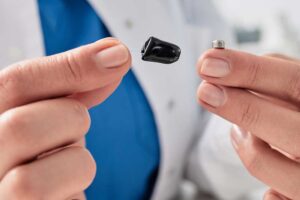
- Advanced Sound-Conditioning Hearing Aids – Modern digital hearing instruments can be specifically calibrated to neutralize your phantom frequencies. Current audiological devices feature sophisticated, integrated tinnitus mitigation algorithms as a standard option. During your personalized fitting session, an expert can program the device to emit an individualized counter-frequency that effectively cancels your specific ringing tone.}
- Acoustic Neuromodulation – This clinical technique focuses on retraining your brain’s auditory processing centers to filter out the phantom noise. By introducing a gentle sound layer that matches your personal tinnitus profile, a specialist can desensitize your neural pathways. This process successfully coaches your mind to ignore the internal loop and prioritize real-world sounds, like conversations with family.}
- Cognitive Behavioral Therapy (CBT). This is a technique used by mental health professionals to undo harmful habits. If you obsess about negative news or life events you can’t control, CBT can help. It will retrain you to focus on the positive and where you do have the power to change things. This helps reduce stress.}
Can listening to white noise help cure my tinnitus?
You might wonder if the concept of fighting fire with fire applies to your ears, specifically using physical white noise to fight phantom white noise. Recent audiological research out of England notes that while consistent sound therapy effectively reduces symptom awareness, it cannot stand alone and must be paired with secondary clinical treatments.
The honest clinical reality is that a permanent cure for this condition has not been discovered, meaning our medical goals focus on deploying specialized treatments to help you control and cope with the condition.
What should be your primary line of defense when dealing with chronic head static? Your absolute highest priority should be to secure a professional hearing evaluation from an expert. This essential baseline test will reveal exactly how much the internal static is degrading your word recognition score and speech comprehension during daily conversation. After that, you should discuss treatment options with your local hearing experts.
Audio Illusions: Explaining Phantom Melodies and Speech in Background Noise
Should you track complex orchestral arrangements or human voices within background noise, your symptoms fall outside the definition of traditional ear ringing. Please do not worry or panic over this development, as it is completely unrelated to schizophrenia or alternative serious mental health conditions. Statistically, you are simply experiencing a well-documented neurological effect called Musical Ear Syndrome, pattern-seeking apophenia, or acoustic pareidolia. Your brain uses pattern recognition to try to make sense of sounds. Consequently, when confronted with a steady, meaningless hum, your cognitive processing filters can accidentally misinterpret the data. For example, pareidolia is when you interpret those meaningless noises into something you’ve heard before, such as music. That said, if you hear detailed instruments or singing when the room around you is perfectly quiet, the symptom is classified as a distinct musical hallucination.